Kiran Shivaraju · Lab
Machines, opened up.
I take real systems apart in 3D, one machine at a time. Every exhibit runs on the numbers the hardware actually has, so what moves on screen is what happens. Drag it, zoom into it, hover any part to see what it is, and read along: a guide explains each step as it happens.
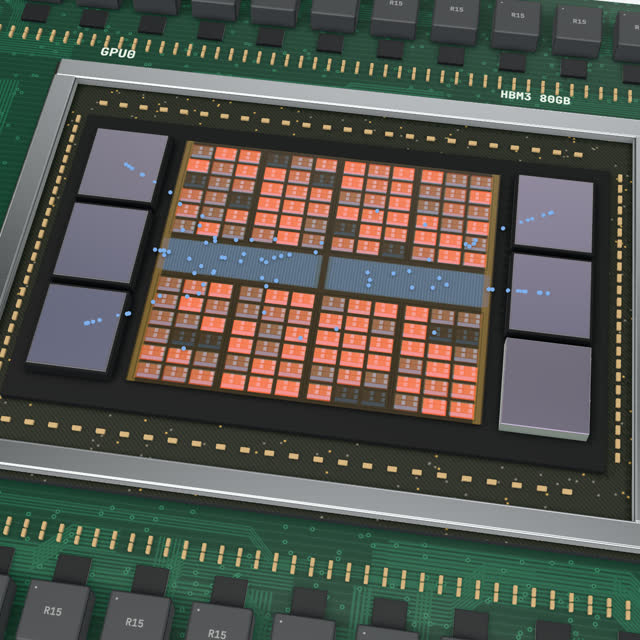 Exhibit 01 · live 3D
New · Exhibit 01 · GPU inference · November 2026
How a GPU runs an LLM, from disk to token.
One Llama 3 8B request on an H100. The 16 GB of weights load in about 2.3 s. A 2,048-token prompt prefills in 57 ms with every SM busy. Then each new token takes 6.1 ms while the tensor cores run at 0.3% of their peak, waiting on memory. Batch 237 users and throughput climbs to 7,950 tokens/s, and it is still memory-bound.
Eight views, from the server rack down to one tensor core and one transformer layer. Efficiencies are stated assumptions, not measurements; the page says which.
Exhibit index · 1 machine
Real numbers. Every part labelled.
GPU · Inference · 03 Nov 2026
GPU Inference
One Llama 3 8B request through an H100: load, prefill, decode, then a batch sweep to the most users that fit.
8 views · 11-chapter guide · hover any part
834 KB · runs in the browser
In the workshop
Next machine
Something else you can take apart. Same rules: real numbers, one model, every part labelled.
How they're built
Three rules behind every exhibit.
Real numbers, one source
Every gauge, chart and glow reads the same model that moves the parts, so nothing on screen can disagree with the motion.
Open up the part doing the work
The camera goes inside: lift the heatsink, pull out one SM, open one tensor core. Hover anything to see what it is.
Light enough to share
One self-contained page under 1 MB, built from code, no downloads. It runs on a laptop and tours itself when left alone.